
There are many types of treatments for chronic pain. A lot of these treatments require medication or surgery but there are also treatments that focus on reducing pain by training the brain without any medication.
Which treatments exist and how do you know which one is suitable for you?
Can you treat chronic pain?
Fortunately, chronic pain can be treated. Medical science has been researching the treatment of chronic pain for many years. In order to know how a chronic pain treatment works, it is good to understand how pain arises.
Contrary to what many people think, pain arises in the brain. Your brain creates pain when it thinks you are in danger. In doing so, your brain makes a decision very quickly. This decision looks at what happens in your body, but the brain also takes your feelings and thoughts about pain into account. The brain also weighs up where your attention is and what you are doing. Treaters often call this the biopsychosocial model. Body (biology), mind (psychology) and your environment (social) all play a role in chronic pain.
This makes chronic pain more difficult to treat than, for example, a broken leg. A broken leg is mainly a biological problem. Chronic pain has such an impact on your life, your feelings and your thoughts, that a simple approach often unfortunately does not work.
We speak of chronic pain when there is a continuous or recurring pain that lasts longer than the normal healing period for an illness or injury, or pain that lasts longer than three to six months.
The good news is that there are increasingly better treatment programmes that take the biological, psychological and social factors of chronic pain into account.

What chronic pain treatments are available?
Biological treatments for chronic pain are often referred to as medical or medical treatments. Which usually means taking medication. This also includes operations and injections, such as nerve blockades.
All medical treatments that focus on reducing pain, often measure the score someone gives to the pain. The biggest disadvantages of most medical treatments are the side effects. Painkillers, in particular, are known to have a negative effect on attention, concentration and your feelings. There are also many alternative chronic pain treatments that focus more on biology, such as CBD oil or acupuncture.
There are many possibilities within the psychological treatments for pain. These are usually treatments with a psychologist, but many physio- and exercise therapists also focus on pain and psychology. Treatments that focus more on the psychological side of pain, often aim to understand the pain better, feel better about yourself and do more in life. In addition, there are psychological strategies in which you learn to train your brain and thus directly influence your feeling of pain. Pain education, cognitive behavioural therapy, EMDR and mindfulness are common treatments that are used for pain.
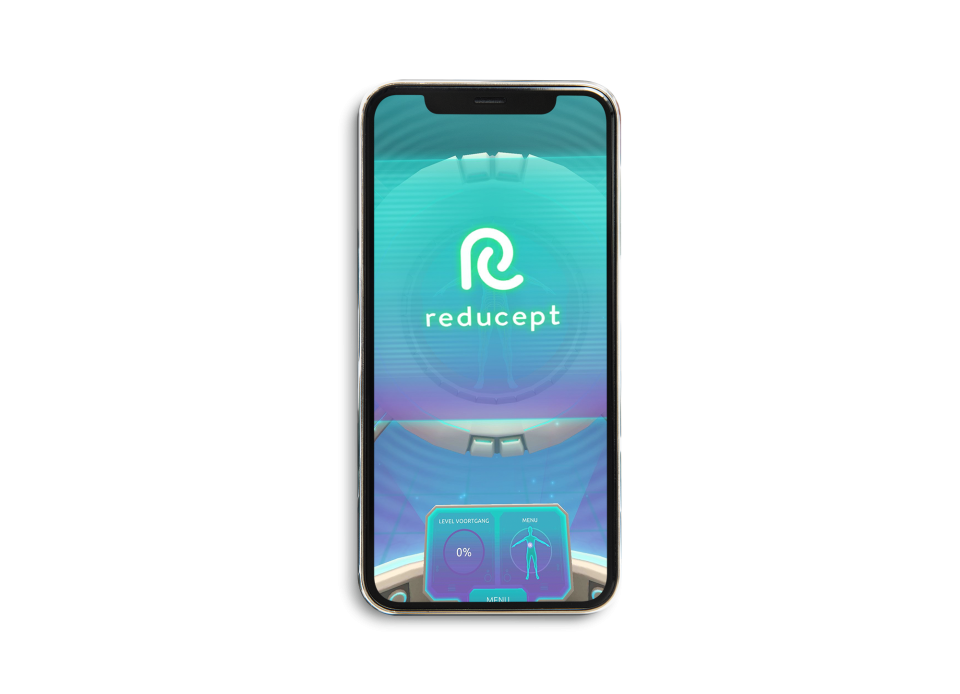
At Reducept we focus on digitally offering this knowledge regarding the training of your brain. Digital or online training is also called e-health. E-Health is a collective term for digital applications in healthcare to support or improve your health as a patient. These digital applications can be actively used by clients, patients, athletes or pupils.
Treatments that focus on the social side are often aimed at returning to work, expanding activities in life and improving social contact. Sometimes this is part of a work programme, or you are in contact with a social worker.
For example: Psychologists are also often partly engaged in building up activities that can also improve your social contacts.
Finally, there are treatments that combine several of these components. For example, there is specialist medical rehabilitation treatment, in which you are helped in a rehabilitation centre by professionals from different backgrounds. You will have a doctor, physiotherapist and psychologist who will treat you in a course of treatment. This is also referred to as multidisciplinary treatment. These are intensive treatments in which you follow treatment several days a week or even spend the night in a rehabilitation centre for a while.

Which chronic pain treatment is right for you?
In most cases your GP will make a referral to the person he thinks is suitable for your problems. If you are beginning to suffer from pain, it is often a specialist in the hospital who will try to determine whether there is a condition that can explain the pain properly, such as rheumatism or MS. If there is an underlying disorder for the pain, it will be treated. Sometimes a specialist in the hospital will refer the patient to a physiotherapist or psychologist, or if the symptoms are serious, to a rehabilitation centre.
It is not always possible to find a clear cause for the pain or to make a diagnosis. Sometimes broader diagnoses are used, such as fibromyalgia or irritable bowel syndrome, diagnoses in which we do not yet know the cause of the pain. In such cases, it is very difficult to choose an appropriate treatment. In many cases it helps to look at the possibilities of using your body in the right way and improving your condition with a physiotherapist. Or you can talk to a psychologist about living with pain. New digital treatments such as Reducept also offer hope, because they train the brain where the pain arises. In many cases patients succeed in living with the pain. Most cases even reduce it. Reducept users report experiencing 74% less pain as a result of using the Reducept training app.
If chronic pain persists, there are several centres for pain control in the Netherlands you can go to. These are often located in a hospital and within these departments you often get medically examined whether the pain can be reduced, or at least become tolerable. Medication is often applied to operations.
Which treatment is most suitable for your situation depends on your preferences. Especially when there is no quick solution for the pain, it is sometimes difficult to know how to proceed. It is indicated that in such a case it can be very rewarding to learn more about how pain works, and to find ways of influencing and coping with the pain yourself.
This is exactly what we focus on at Reducept. You deserve a life with less pain.
The future of chronic pain treatments
As far as we are concerned, the future of treatments for chronic pain lies in training the brain. After years of medical research, we know that the brain plays the greatest role in the creation and maintenance of pain. Whether you have pain in your back or legs, ultimately all pain arises in the brain. Through our training you train the source of the problem and learn skills along the way that you can use for the rest of your life, without the side effects we know from medication. Find out yourself what it can do for you.
Try Reducept for free for 14 days. Completely free of charge. Click here.